
July Trestleboard 2026
From the East
 By: Worshipful Jeremy A. Dreaden

Worshipful Sirs and Brethren,
Greetings from the East. This year continues to be filled with exciting events and we continue to strengthen the foundation of the Lodge. On June 23rd, we had a very successful Saint John's Festive Board and voted on three new members to receive the degrees of Masonry in our Lodge. We have also raised funds for our youth groups and Masons for Mitts, and we have collected a large number of items to donate for the Mammathon. Our Lodge is healthy and growing, Brothers! I encourage anyone that hasn't been out in a while to come back and see how we are doing. Thank you to all the Brothers in the Lodge, and special thanks to the Officers for the great work they are doing this year making Masons and making good men better.
Sincerely and Fraternally,
Worshipful Jeremy
From the West
 By: Kimaili K. Davis
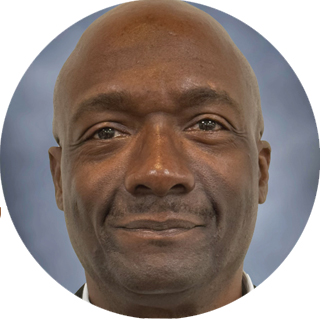
Cultivating a Broader View
As we move through life, it is incredibly easy to let our world shrink. We naturally gravitate toward comfort, often surrounding ourselves with people who think exactly like we do, work in the same fields, or share our exact background. But if we only look into a mirror, we never see anything new.
With a few decades of career, education, and life experience behind me, I’ve realized that one of our greatest responsibilities—both as Masons and as members of the wider community—is to actively resist that shrinking perspective. To truly grow, we must intentionally welcome a wide variety of voices into our lives.
I am not speaking of diversity in a narrow or political sense, but a genuine diversity of thought, age, and experience.
True progress for mankind happens when we step outside our echo chambers. We need the energy of the younger generation to challenge our assumptions, just as we need the seasoned wisdom of those who walked before us. We benefit immensely when our circles include people who work with their hands, those who work with their minds, those who travel, and those who stay close to home.
Engaging with different viewpoints sharpens our intellect. It doesn’t mean we change our core values, but it forces us to understand why we believe what we believe, keeping our minds flexible rather than rigid.
This month, I challenge you to strike up a conversation with someone outside your usual comfort zone. Listen to a different life story or appreciate a new approach to a problem. By keeping our circles wide, we do our part to build a more thoughtful, balanced world for all of mankind.
Sincerely and Fraternally,
Kimaili Davis Sr. Warden
From the South
 By: Peter A. Parsons

A big deal is often made in freemasonry about the fact that our ceremonies are memorized. Candidates are often told after their first degree that, in case they didn’t realize it, no one was reading from a book. All the officers participating in their degree took the time to memorize their work and deliver it from memory. This is certainly impressive to our candidates, and others who know that we do it. And it certainly adds something a bit special to the memory of our degrees, knowing that such care was taken to put on these events. But while that is true and meaningful, I would ultimately submit that these are not actually the reasons we do this.
So why, then, do we memorize this stuff? Certainly, from a historical point of view, we can say there was a time, not all that long ago really, where that was the only way you could learn it. Some of our lodge's current members can even remember a time when they themselves could only learn their work “mouth to ear”. It wasn’t written down, even in cipher, to be read from. It could only be taught to you by another brother, and that brother could only teach or deliver it from memory. But again, that really isn’t why we still do it. We have books now, so we could read from them. One might even argue that some degree performances would be better for it if we weren’t relying on the variable quality of our officers’ memories. Of course, it’s always been done that way, so there’s an element of tradition to it. But while there’s beauty in tradition, I still say that’s not a good enough reason. Traditions can adapt without losing their meaning. The fact that we have a cipher is a perfect example of that.
The clearest demonstration of the real reason for our memorization is actually found in the candidate himself. In order to move on to the next degree, he has to commit a proficiency to memory. Why? While our performance during a degree was for his benefit, he’s hardly performing for ours. We know this stuff already. We’ve heard it a million times. Chances are its neither the best or worst version we’ve ever heard. But it’s not about performing. It’s about the candidate showing that he learned the lessons we presented.
That is why we memorize. So that we learn. These ceremonies teach our candidates important lessons, meant to make them all better men than they were before walking into our lodge. But in order for us to teach them those lessons properly, we must first learn them ourselves. In memorizing their proficiencies, candidates memorize the basics of the lessons we teach them in their degrees. By memorizing the degrees themselves, officers go deeper into those lessons, gaining greater understanding in the process. In both cases, taking the time and effort to memorize makes those lessons sink in deeper than they ever would just by reading them. Those words that we’ve drilled into ourselves will come back to us when we need them most. When the checkered lives we walk through challenge us and try to lure and tempt us into following our baser instincts, we can remember these lessons, even if we stumble over the exact words. And those things we have memorized can guide us to follow the better path. And in quiet moments, as our minds wander, they can wander to those lessons, and we can ponder and meditate on the meanings of what we have memorized and discover deeper lessons that are not immediately obvious, and which we may never have considered if we only ever know these words when we are looking at them.
Memorization lets us internalize the lessons of our craft more fully, so we can truly become able to practice out of the lodge those great moral duties which are inculcated in it, and further enables us to become the men the Great Architect created us to be.
Fraternally,
Peter A. Parsons.
Masonic Family Calendar
Conejo Valley Lodge No. 807 © 2013 - 2026 | Privacy